Is a Weighted Softball Safe for Young Pitchers? Here’s My Opinion as a Fastpitch Pitching Coach

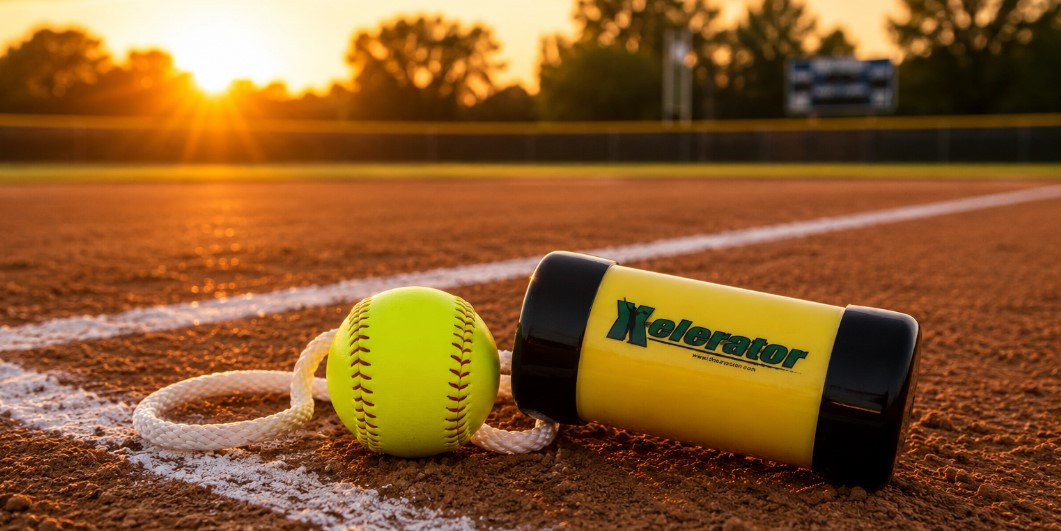
I had a young pitcher, 11 years old, come to me from another pitching coach just the other day. And while her mechanics are very solid, I asked her to show me her fastpitch pitching warm-up, and she grabbed her Composite Xelerator with the 12-inch leather ball and just started zipping it around as a warm-up tool. I suggested that the first thing she should do to dynamically warm up is arm circles, then throw overhand, then into a progressive pitching motion, from flicks to Ks or mediums to walk-throughs, etc., then on to full distance pitching. And if she’s going to use this tool as one of her pitching tools, I recommend it more as a training or strength-building implement than a warm-up implement, because it weighs a lot more than a regular softball.

And here’s a little more detail on all my thoughts regarding this:

  • A regulation 12-inch softball weighs about 6.25–7 oz.
  • A 16 oz training implement is more than twice the mass.
  • In a windmill pitch, the shoulder experiences substantial rotational forces. Increasing the mass increases the torque required to accelerate and, importantly, decelerate the arm.
  • At the beginning of practice, the rotator cuff, scapular stabilizers, connective tissues, and nervous system are not yet fully prepared for high-load, high-speed movements.

From a sports performance standpoint, most warm-up progressions follow this pattern:

  1. Increase body temperature.
  2. Activate the shoulder and scapular muscles.
  3. Gradually increase arm speed.
  4. Perform full-speed throws or pitches.
  5. Introduce overload work, if appropriate.

That progression minimizes sudden loading of cold tissues.

Where I would use a pitching device like this

If I were designing a pitching strength-building session, working on correcting an arm circle hitch, or focusing on increasing velocity, I’d be much more comfortable using it:

  • After the pitcher has completed a full dynamic warm-up.
  • After light throws or warm-up pitches.
  • During a dedicated strength or overload block.
  • In small volumes with good mechanics.
  • Not every day.

Using it as the very first thing a pitcher does would make me more cautious, particularly with younger athletes.

Age of the pitcher matters somewhat

For 10U, 12U, even most 14U pitchers, I would be especially conservative because they’re still developing strength, coordination, and tissue tolerance.

For mature high school or college pitchers with good mechanics and a structured training program, overload implements may have a place—but they still don’t replace a proper warm-up.

One thing I’d emphasize

The greater concern may not even be the static weight—it’s the combination of weight and speed. The force on the shoulder isn’t determined solely by weight. A heavier object moving at high speed in a circular path increases the rotational demands on the shoulder, elbow, and trunk. That’s why coaches are often cautious about introducing weighted implements before athletes are thoroughly warmed up.

Based on current sports medicine principles, I would view a 16-ounce pitching trainer as a training implement rather than a warm-up implement. I would want the shoulder and the rest of the kinetic chain prepared first with progressive movement and normal throwing or pitching before introducing additional load. That position is consistent with general overload-training principles, even though there isn’t strong published evidence specifically evaluating this particular softball training aid as a warm-up tool.
How to throw faster as a softball pitcher

It’s a new year, but you have the same goal: you wanna throw harder. Good.

From tons of college camp experience, I can tell you that serious D1 college coaches won’t give a second look if you’re not throwing 60+ MPH on the Pocket Radar. If you want to increase your speed this year, you must work! There is no simple answer, but I will give you a few key areas to focus on.

To increase speed as a softball pitcher, you will want to

  1. Focus on generating power from the ground up.
  2. Maximize your arm speed during the pitch delivery.
  3. Get yourself into a targeted, balanced strength training routine focusing on hip and core strength.

Mechanics matter also, don’t forget. Even more important than speed, proper mechanics equal long-term health and the ability to go extra innings with even more fluid motion as the game goes on.

Generate power from the ground up

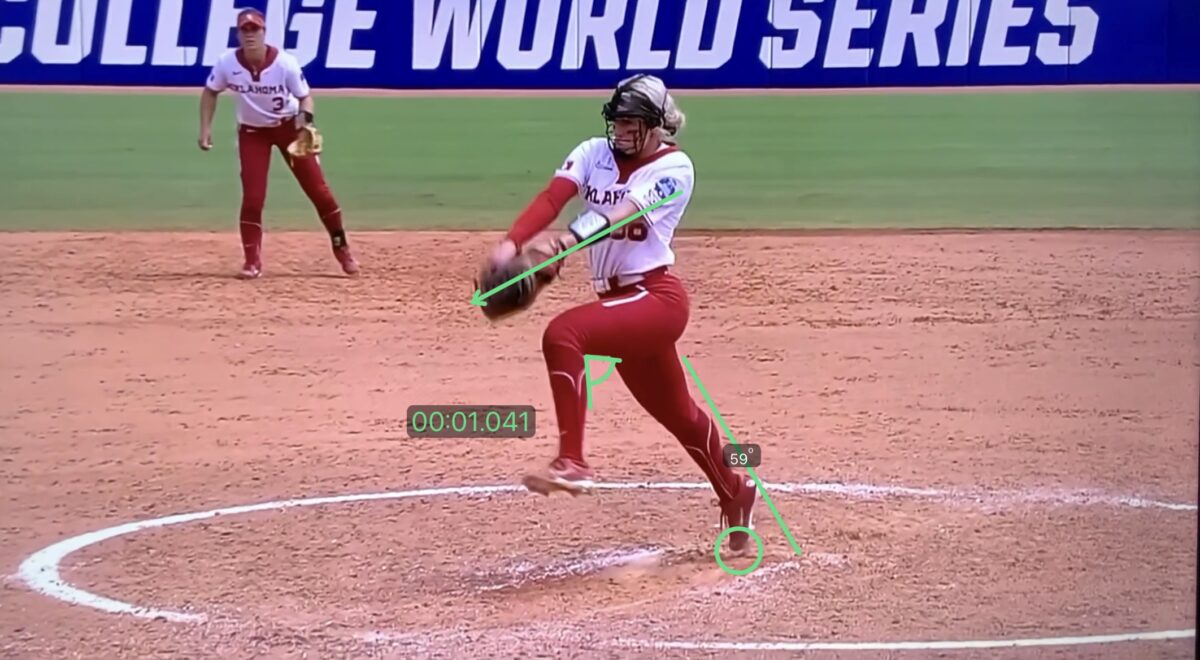
The lower body is essential for maximum velocity. This involves explosively driving off of the mound. When your coach yells, “Use your legs,” they just mean push hard off the mound and engage the glutes and the quads. Drive off the mound like a sprinter. Understand that this initial force can generate an additional 10 MPH when done with correct intent.

Arm speed matters

Arm speed by itself can generate up to 50 MPH when done efficiently. Follow that with a strong, powerful wrist snap to take the velocity up another notch on release. And don’t hold back. Ensure your arm fully extends the whip through the release for optimal power transfer.

Build core strength

Now let’s circle back to the hard work part. This includes proper strength training, especially in the core. Sit-ups, 6-inch leg lifts, and plank variations strengthen the core muscles so you can stay tall and prevent energy leaks. And keep in mind, targeted dynamic exercises for the rotator cuff are also vital. Keeping this collection of muscles that work together to perform complex arm and shoulder motions is key to maintaining velocity and shoulder health.

So in summary, if you want to increase your velocity as a fastpitch softball pitcher in 2025, it’s not rocket science. You have to put in the work and reps. I recommend you focus on lower body strength and leg drive, arm speed and whip, along with balanced strength training, because naturally, getting stronger means you will throw harder, and when done right, you will stay healthier. Good luck and enjoy the pitching journey!

Due to demand, I’m opening up additional 1-hour group lesson slots

The new lesson format is semi-private and designed to simultaneously instruct three pitchers or hitters of similar age or experience. There will be occasional weeks when a pitcher or hitter has to cancel on short notice, and then the lesson will consist of a group of two or even an individual. The Gap, PA facility has three full pitching lanes next to each other, which works very well.

My experience has shown that this semi-private lesson format is not only effective but also highly engaging. The competitive spirit it fosters pushes pitchers to increase their speed, accuracy, and leg drive. Working alongside other pitchers accelerates skill development, often faster than with private lessons. Your daughter will receive focused instruction in a professional indoor space, allowing her to work on the specific drills I give her while engaging in healthy competition for an hour.

Our lessons are designed to provide a comprehensive learning experience. Most of the lesson will be spent in her private lane, working on the pitching techniques I’ve taught her. We will also have focused time as a group for fundamental drills. Occasionally, I’ll introduce drills from my 6-week Speed School and strength training as the need or opportunity arises, ensuring a holistic player development experience.

There are limited spots available in this new format, so contact me if you are interested. The lessons are weekly and tentatively scheduled for Monday in the Gap, PA facility. The cost is $45 per hour per student per lesson. This may seem like a significant investment, but when you consider that indoor space typically costs at least $30 per hour alone, the students find high value and individual growth with the additional instruction, competitiveness, and targeted drills. Pitchers and hitters who want to dominate come weekly.

Pocket Radar Review: Smart Coach

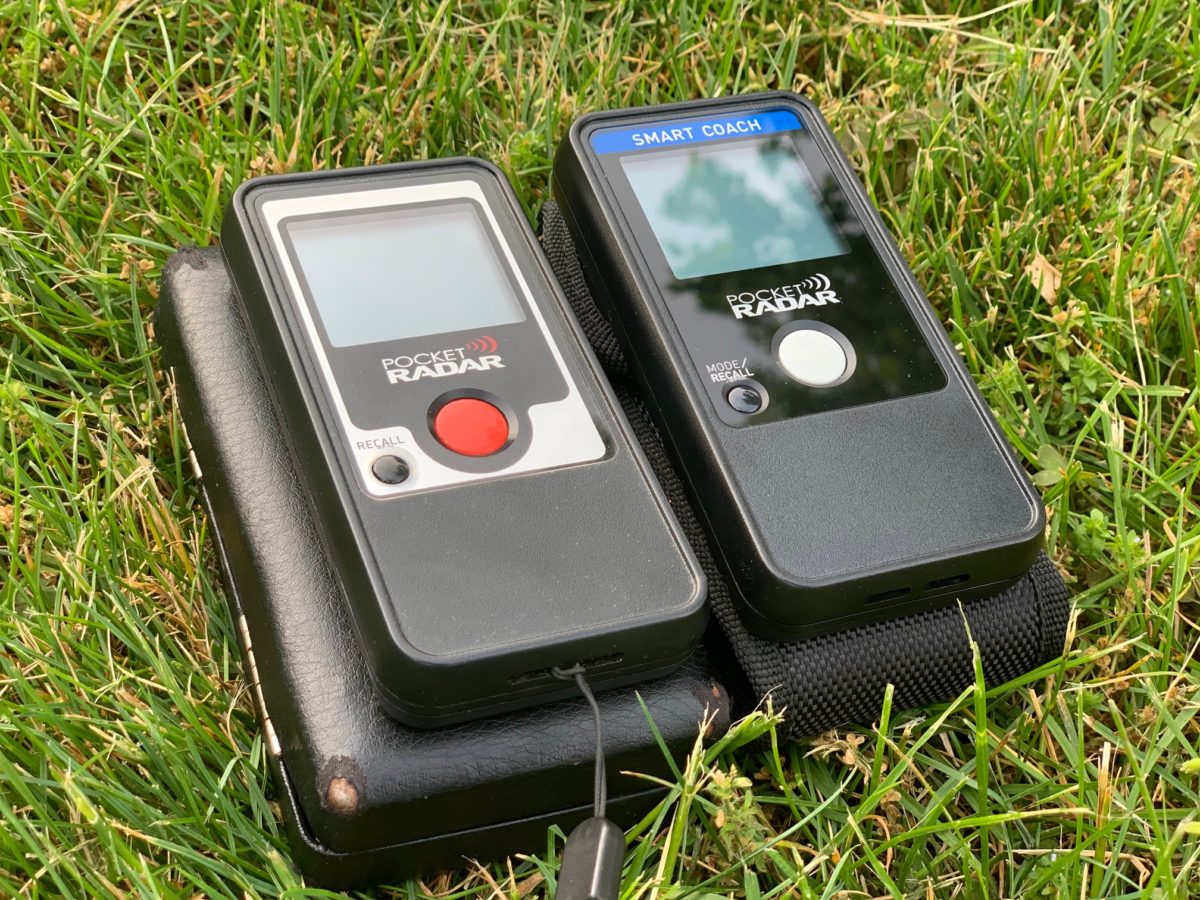
Two significant changes in the newest Pocket Radar, called the Smart Coach Radar are:

  1. You can now power it with a 5 volt USB battery pack or plug it into an A/C wall outlet with a USB cube.
  2. It hooks up to an app, which records video and ties the video to the speed of pitch or exit velocity of a softball off a bat!

Having used the original red button Pocket Radar for years and frequently getting frustrated with trying to catch in one hand and time holding the red button down (while timing when the pitcher’s arm was in the 12 o’clock position) in the other it will come as no shock that I was ready to try something new. The red button Pocket Radar, for your information, turns out was never designed for tracking softball pitch or bat speed. It was designed for use by law enforcement to give a pocket-size device for use to check traffic speeds.

I put some time into a Smart Coach Pocket Radar review because I’ve spent a few months testing it out directly in my softball pitching and hitting lessons. There’s a lot of information and tips on different ways to use the device out there, but that is not the intent of this post. The intent of this post is to give a broad overview and to evaluate the product’s worthiness priced at  $399, and base any recommendation off of my testing.

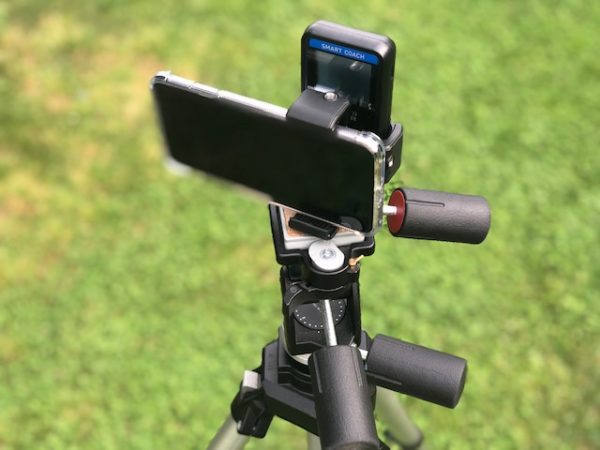
Smart Coach Pocket Radar on tripod with iPhone
Smart Coach Pocket Radar on tripod with iPhone using the tripod accessory sold separately.

Continue reading “Pocket Radar Review: Smart Coach”